In my last article, I wrote about how a new DEA rule is going to affect wildland EMS contractors and the care we provide on the fireline.
Unfortunately, this is no longer a theoretical conversation. This is where we are at. Not exactly told “No”, but definitely not told “yes” either. Well, not without a near impossible to overcome mountain of administrative hurdles.
For this reason, during the upcoming fire seasons many wildland EMS providers will not be able to carry the controlled medications that have been standard in emergency medicine for decades. Simply put, the owners of most wildland EMS companies are not willing to risk everything they have spent years building. And frankly, why should they?
At this point, it is not even clear who would ultimately be held responsible if these regulations were enforced against a wildland EMS contractor operating on a federal incident. Would I, as the business owner, face the consequences? Would our medical directors risk losing their licenses and their ability to practice medicine? Would my employees be the ones held accountable? Or would it come back to me?
If I lose my business, then my employees lose their jobs. As much as I would prefer to take the consequences myself rather than see anyone else affected, when all the math is done, the risk simply is not worth it.
So now what, medications like fentanyl, ketamine, and midazolam are not going to be on us at all times any time soon. Knowing that, we are going to have to adapt.
The solutions available to us are not ideal. They are workarounds. And in many cases, they represent a real downgrade in the level of care we can provide to firefighters operating in remote environments.
But we will still do everything we can to take care of the people on the fireline.
This is what that adaptation could look like.
Pain Management Without Narcotics
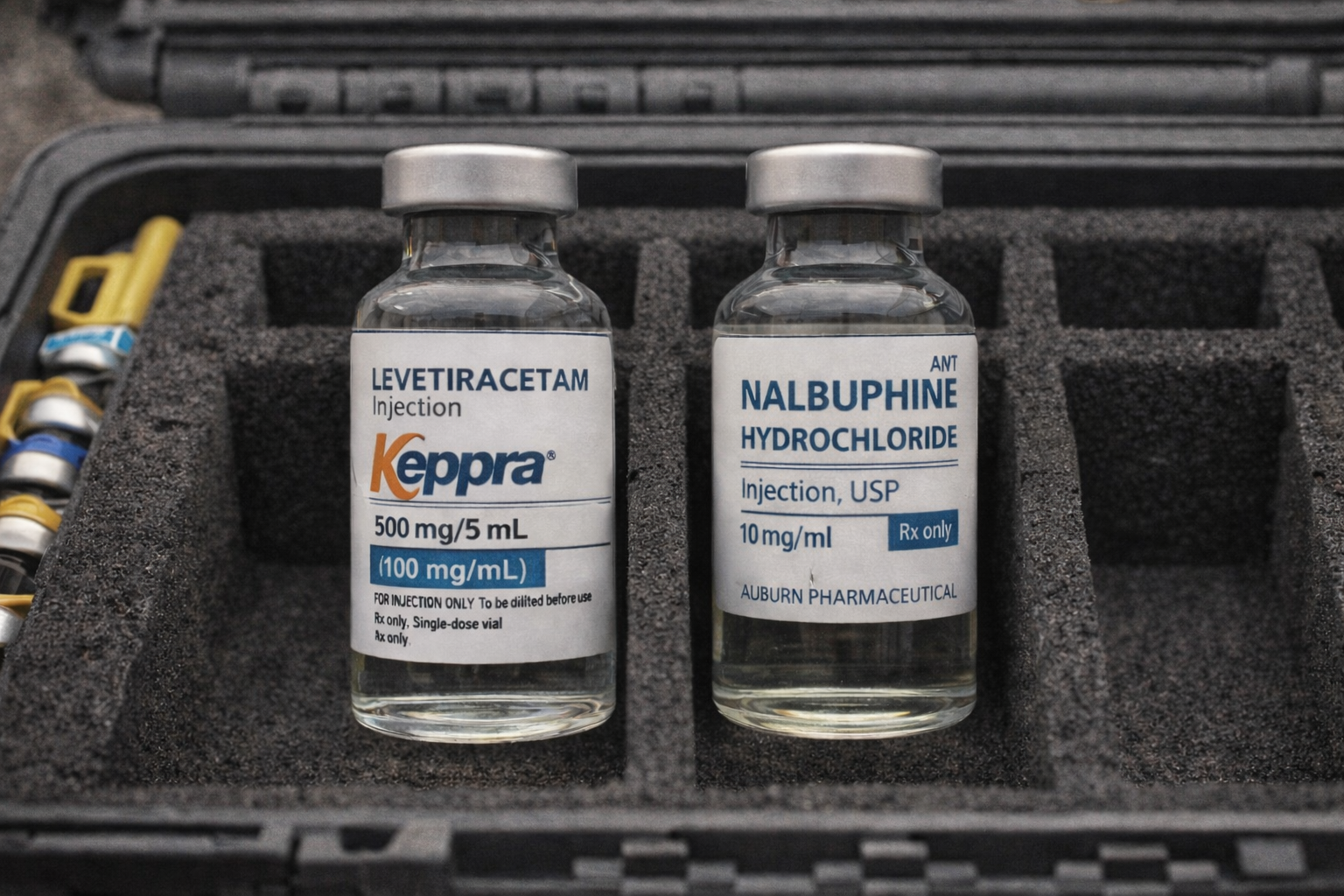
There are many non-narcotic pain medications out there but right now I want to talk about one I only just learned about within the last week. That medication is Nalbuphine.
Nalbuphine is a pain medication that has been used in emergency medicine and anesthesia for many years. It can help reduce pain and is sometimes used as an alternative when stronger narcotic medications are not available.
Modern studies comparing nalbuphine to morphine show that it can provide similar pain relief for moderate pain, but it does not work as well for severe pain.
While trying to learn about this medication I consulted Dr. GPT and was shown a 2015 meta-analysis comparing nalbuphine and morphine across multiple clinical trials that found that the two medications produced similar pain relief overall, but confirmed that nalbuphine has a ceiling effect, meaning that increasing the dose only helps so much and eventually stops providing additional pain relief.
Dr. GPT also brought up a 2011 review published in the journal Pain Practice that had reached similar conclusions, describing nalbuphine as an effective medication for moderate pain, but noting that it is less effective for severe traumatic pain than medications like fentanyl or morphine.
There is another important issue with nalbuphine that providers should understand.
Nalbuphine can block other opioid pain medications from working effectively for a period of time. That means when a patient reaches the next level of care—whether that is another ambulance, a helicopter crew, or the hospital—the stronger narcotic medications those providers normally rely on may not work well until the nalbuphine begins to wear off.
In other words, our treatment in the field can make it harder for the next medical team to control the patient’s pain.
That needs to be communicated at hand-off.
What This Means for Paramedics
For those of you who are paramedics here is the protocol that Dr. GPT prescribed. For those of you who are no paramedics, this is where you scroll to the next part while we nerd out for a bit.
Minuteman EMS Nalbuphine Protocol
Concentration:
10 mg/mL
Indication:
Moderate to severe pain.
Initial Dose
IV: 5–10 mg slow IV push
IM: 10 mg
Repeat Dose
5 mg every 10–15 minutes as needed.
Maximum Field Dose
20 mg total.
Contraindications
-Hypersensitivity to nalbuphine
-Significant respiratory depression
-Recent opioid or kratom use
-Known opioid dependence
Because nalbuphine can trigger withdrawal symptoms in patients who have recently used opioids or kratom, paramedics should ask about recent use whenever possible before administering the medication.
Paramedics should also clearly document “Nalbuphine administered” in their patient care report so the receiving medical team understands what medication has been given.
Okay cool. This is an option that might help some in most situations. But wildland fire can produce extremely grotesque injury patterns. This is where you need the real thing, not some knock-off, half-baked substitute for fentanyl.
Reflecting on my time working as a paramedic, I always took great pride and satisfaction in the times when I was able to relieve people of their pain. Watching someone suffer through great pain is not fun, especially when the means to subside it are available just not accessible due to regulations. I do not envy the many paramedics who are going to just have to sit and watch a fellow firefighter suffer this summer all because of the way some laws were written.
Seizure Management Without Benzodiazepines
Pain management is only part of the problem.
The other major concern created by these regulatory changes is seizure management.
As some of you already know, I had a seizure on the fireline in 2025. Long story short, because the REMS team that took care of me was outstanding and well prepared, they had Versed on hand and were able to terminate my seizures on the spot.
Under normal circumstances, the frontline medication used by paramedics globally to stop seizures is a benzodiazepine, most commonly midazolam. These medications work quickly and are widely accepted as the first-line treatment for active seizures in emergency medicine.
Without access to those medications, we will be forced to rely on alternatives.
One of the medications we will likely carry for this purpose is Levetiracetam, better known as Keppra.
Benzos and levetiracetam serve different roles in seizure treatment. Benzos such as midazolam are used first because they work quickly to shut down the abnormal electrical activity in the brain that is causing the seizure. Well, Keppra works differently. Rather than immediately stopping the seizure, it is more commonly used to stabilize the brain afterward and reduce the likelihood of additional seizures occurring.
As soon as I was flown to the hospital after my incident I was given Keppra and have been on it ever since.
In my education consultation with Dr. GPT it brought up a major study called the Established Status Epilepticus Treatment Trial (ESETT), published in the New England Journal of Medicine in 2019, examined medications like Keppra in patients whose seizures had already failed benzodiazepine treatment. The study found that drugs such as levetiracetam stopped seizures in about 45–47% of cases, but importantly they were used after benzodiazepines had already been given, which is how modern seizure treatment protocols are designed.
Again, I do not envy the paramedics who are going to just have to sit there and watch somebody seize.
The Reality of Remote Medicine
The problem with all of this becomes even more obvious when you consider where wildland EMS actually operates.
We are not working in an emergency department with neurologists down the hall.
We are working miles from the nearest road.
Evacuations can take hours.
Sometimes helicopters cannot fly.
And when something goes wrong, the only medical care that exists is the care the medic carried into the woods.
For decades, paramedics have relied on a small number of medications that reliably treat the most dangerous problems we encounter:
Severe trauma pain.
Active seizures.
Airway emergencies.
Those medications were not chosen randomly. They became standard because they work.
Taking them away does not eliminate those medical emergencies.
It simply leaves us with fewer tools to manage them.
We Will Still Show Up
Despite all of this, one thing will not change.
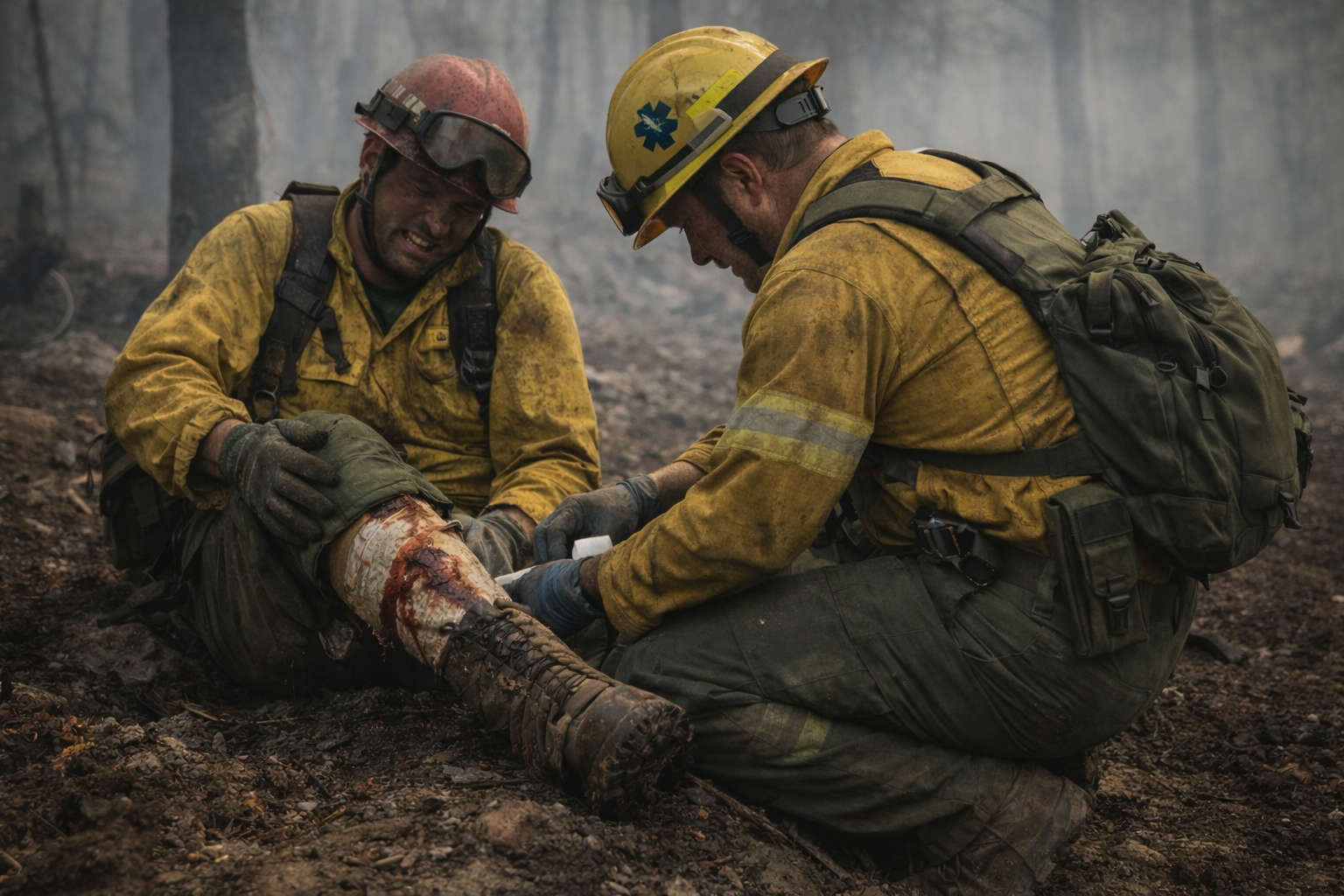
When someone gets hurt on the fireline, we will still be there. Paramedics are so much more than just an administrator of medications. There are still many many things a paramedic can do to save someone's life. Now they just have to do those while you’re unsedated and/or in extreme pain.
We will carry the medications we are allowed to carry.
We will improvise where we have to.
But we should also be honest about what is happening.
The changes being forced on wildland EMS are not improvements in patient care.
They are compromises.
And the people who will ultimately feel those compromises the most are the firefighters working in the most remote and dangerous environments in this country.
As I mentioned in the last post, if you think you may have some sort of connection with someone who may be able to help push back on this, please reach out.
Thanks